Author: Anita Inglis

  • Should I give up fighting for my alienated child?

    Should I give up fighting for my alienated child?

    This heartbreaking question is one I see a lot in support groups.

    Fighting in family court is brutal.

    It’s hugely expensive, not just financially but also mentally, physically, emotionally. It can also take a tremendous toll on our relationships with those around us. If you’ve been battling in court for years, then you are very possibly tapped out and wondering whether you can go on. You will be given all sorts of conflicting advice – never give up!!! Stop this, it’s killing you and you’ll never win. And on and on. Ultimately, the only person who can decide when enough is enough is you.

    My hunny spent 8 years off and on fighting in family court to be a parent to his children. It was grueling, it put our lives in a holding pattern for years because we lacked the resource to do anything else. He reached breaking point when he found out days before court that his ex wasn’t going to move to the town she said she was. We had given up our home, all ready to move to that town and have 50/50 care of the children. It was going to be almost impossible for him to win in court.

    He said to me – I can’t keep doing this to the children. They were well down the path to full blown alienation at this point. We were hanging on to a relationship with them in our home, but outside our home they were bad mouthing us, telling lies etc. He knew if he kept fighting, they would be put under more pressure to reject us and it was taking a toll on them. He decided in that moment that he would accept reduced time, give their mother everything she wanted and focus on building a good life while being basically a disneyland dad. The children were 9, 8, and 6.

    It took less than a year before things started to go awry. The children complained about not spending time with us, the eldest struggled hugely at school and with his mental health and we ended up back in court under urgency. That time my hunny took to step back was enough to hold him through the next round of court, where he ended up with 50/50 care.

    Family court with a high conflict person is a marathon, not a sprint. It’s ok to take time out to rest and heal. It’s ok to build a life that works for you, in fact it’s not just ok, it’s essential. We need to be in our best shape for the moment the children need us to get back in the fight or for when they are old enough to want to pursue and rediscover a relationship.

    Parenting doesn’t magically end when the court deems it does, or a child ages out of the agreement. Parenting is a life long journey, our adult children sometimes need us more than they did when they were children.

    We need to make sure we look after ourselves well enough to hold hope, and when we get depleted, have people around us who can hold hope for us.

    The best thing we can do for our alienated children is our own internal work, so that we deal with our wounds and inner pain. This means we can be the healthy, happy parent they need us to be.

  • Do’s and don’ts of communicating with alienated adult children (and older teens)

    Do’s and don’ts of communicating with alienated adult children (and older teens)

    Buckle up, because there are some hard truths ahead.

    Truth number 1 – our adult children don’t owe us a relationship.

    Yep, I said it. Adult children owe us nothing. In a family without alienation, we get the relationship with our children we have earned and deserve. If we’ve been a supportive parent, who gave our children the space to grow into adults they want to be, we can be rewarded with enriching, loving relationships with our adult children. If we’ve been unsupportive, crappy parents, our adult children may have good reason not to want us to be a part of the world they create as adults.

    Either way, we are a part of our adult children’s lives by invitation and not entitlement.

    Where it all gets unstuck is when pathogenic parenting or parental alienation has interrupted a previously healthy parent/child relationship, where a child has been made to chose between their parents and has rejected the healthy, loving parent because it’s safer. The child loses their ability to put their own wants and feelings ahead of the pathogenic parent, and refuses contact and connection with the targeted parent.

    When this happens to our child, how do we attempt to relate to them as adults?

    I’ve seen lots of good news stories about alienated children reconnecting with the targeted parent when they have a choice and it’s safe for them to do so. There are also many other stories without that happy ending. Some of those unhappy endings have been unwittingly fueled by the targeted parent and their lack of understanding of how to meet their alienated child in a way that feels safe. You can read more about how to manage relationships with alienated children here.

    Step one – put yourself in your adult child’s shoes

    Have you ever had an ex stalk you? A cling-on friend or family member who just refused to take no for an answer and would bombard you with their feelings, wants and desire for you? Remember the ick factor for that? How intrusive and abusive those communications felt? If you haven’t experienced directly, you’ve probably read about it or seen it in a movie etc.

    Having someone we don’t want a relationship force their feelings on to us can be incredibly distressing and abusive. If our child perceives us as not a safe person, imagine how our attempts to tell them how we feel about them lands.

    One of the golden rules around communicating with estranged and alienated children is to focus on how our communication is likely to be received, rather than us simply dumping our feelings on the other person. If there are more I statements that statements about the person we are communicating with, we are in danger of coming across as abusive and narcissistic, no matter how well intentioned we are.

    Step two – timing is important

    If we accept that us reaching out may not be well received, and instead may feel intrusive or distressing, then we need to be mindful of that when we reach out. It’s tempting to try and be a part of the big moments, birthdays, holidays etc, and to send heart felt out pourings of love and longing. Remember the creepy stalker comparison?

    Instead of intruding on your child’s special day, send something a few days earlier. It fills two purposes, firstly it lets your child know that you are thinking of them and remember them at important times. Secondly, it gives them space to enjoy their special day without living in dread of your name popping up and dredging up real or imagined hurts and resentment.

    Step three – respecting their request for no contact

    This can be incredibly difficult to accept. When do we ‘give up’? Or is it simply that we reframe it to ‘respecting the boundaries of our adult children’? Either way, at some point there may come a time when you are exhausted from screaming into the void, or reaching out to be rejected repeatedly.

    Here’s a suggestion for how to frame that conversation with your adult child.

    Hello child,
    You’ve made it clear that you don’t wish to have a relationship, and I think it’s also been clear that I have had a hard time accepting that. I’m sorry for continuing to push my agenda against your wishes. I hope you know how much I love you and long to be a part of your life, but I also accept that whether that happens is up to you. I know there are good reasons for you feeling the way that you do, and should you ever wish to talk those through with me, I am willing and ready. Until then, I am going to respect your wishes. Any further communication will be instigated by you, with the exception of me updating my contact details if they change. If you wish me still to maintain some contact, with me understanding and respecting your boundaries, then please let me know.
    Your parent

    Here’s what this communication is saying:

    Hey kiddo –

    I realise I’ve been an overstepping pain in the butt. I hear you now, and I’m sorry.

    I’ve been so wrapped up in my story and my pain, I haven’t been listening to you or understanding your story and pain. I’m open to hearing those uncomfortable truths now and accepting some responsibility for how things are.

    I want you to be able to contact me, so I’m going to let you know how to do that. If you still want me to try and communicate in a respectful way, then I’m here for that.

    Step four – live your life

    When we have children, we never imagine a life without them in it. We don’t think we will be estranged or alienated from our children’s lives or their lives of their children. Our children aren’t dead, so we can’t mourn their passing. Society judges us, there is an immediate assumption that we must have been a crappy parent. Regardless of all of that, we still deserve to be happy, we need to learn how to build lives around our grief and become people we would want to spend time with.

    Step five – own your sh*t

    There are always many sides to the stories around relationships. Each of those is valid, even if it isn’t reflective of the facts. It’s valid because it’s what the other believes. If we’re able to accept that our children’s stories about us, about their experience of us, and of the childhoods may not match our own, we’re on the path to owning our part in things. No matter how abusive and alienating the other parent may have been, none of us is perfect. We will have done things that hurt our children, even if that was never our intention. One of the special talents of pathogenic parents is taking a small incident and creating a whole narrative of abuse around it. When we deny it happened, or minimise it, then we are telling our children their feelings aren’t true. It’s invalidating and adds to the disconnect.

    If we can be curious about what hurts our children are carrying, if we can be open to the idea that we may inadvertently have been part of the problem, we are far more likely to be able to connect with our wounded adult children.

  • How to deal with an overstepping ex or stepparent

    How to deal with an overstepping ex or stepparent

    If I had a dollar for every time I heard about someone overstepping in a step-family dynamic, I would be a very rich woman. It is right up there with some of the most common complaints in a step-family.

    So what exactly is overstepping? Who decides?

    In simple terms, it’s when one person intrudes on the space/boundary/home etc of another.

    For some mamas, it means whenever a stepmum performs a mothering task without the consent of the mother.

    For some stepmums, it means whenever a mum tries to insert her opinions/demands into the home of the stepmum.

    Gosh – does anyone else see what I see?

    When we try and control what happens in the other home, it can often feel like overstepping.

    Women tend to feel like their counterpart is overstepping more than males, in my experience. I think this is in part due to the expectations placed on women to parent and run households. We are socialised to see women as nurturers and caregivers and many parents tend to expect their female partners to step straight into a mothering role. This can feel incredibly offensive to a mother who is used to be the sole female role model and carer in her children’s lives. It can be difficult for a mum to step back and allow another women to ‘mother’ her children.

    In a healthy dynamic, where step/parents are solid and secure in their roles, they can have conversations about co-parenting and make joint decisions about parenting. If you have an over stepper, then it’s almost impossible to have those conversations and co-parent.

    Here are some golden rules to help with overstepping

    1) Parents do not have to parent with their ex’s new partner.

    Not going to lie, this one was a hard one for me to grasp first off. I expected a seat at the parenting table. My hunny demanded a seat at the parenting table for me. Unsurprisingly, his ex was not on board with that. It caused a huge amount of conflict. Now my feeling is…

    I’m very glad to step back and allow my partner and his ex to parent together outside our home. In our home, my partner and I parent together.

    Anita Inglis

    2) Stepparents do not have to parent with their partner’s ex.

    I saw a post recently accusing an ex and stepparent of parental alienation because the stepmum wasn’t getting permission from the mother before parenting in her home. People, that is not parental alienation, that is boundaries. If you are demanding people comply with your values and opinions in their home, you are the over stepper.

    3) You can only make the rules for your home

    In the ideal world, children would have the same expectations and similar experiences in each home. If people had the same values and expectations, they probably wouldn’t have gone their separate ways in the first place.

    People separate/divorce usually because they don’t agree on some fundamental issues. Expecting those differences to magically disappear when it comes to parenting in different houses, especially with new partners, seems naïve at best.

    4) Conflict between homes creates loyalty binds for children

    There is a huge difference between conflict and disagreement and pathogenic parenting/parental alienation. Unfortunately, there seems to be a lot of confusion as to what PAS is and people will accuse people setting boundaries and reacting to their overstepping of engaging in parental alienation.

    Look at what messages you are sending your children. Are you making it uncomfortable for them to be around you because of your attitudes to the family in the other house? Are you complaining about your ex or their partner overstepping? Are you demanding your ‘rights’ at the expense of both sides of the child’s family being able to participate or be involved?

    If you are, then you are the one creating the loyalty binds. In situation like this, children may reject you or choose the other house over you. Your attitude and the drama and discomfort it creates may mean the child seeks to limit time with you, so as not to be exposed to your upset and unkind words about people they love.

    5) Children don’t reject emotionally healthy parents who don’t abuse them without some form of coercion from an outside source.

    This is one of the foundational tenets of whether a child rejecting a parent is because of pathogenic parenting/alienation.

    • Emotionally healthy parents don’t attempt to control what happens in the other home.
    • Emotionally healthy parents don’t attempt to restrict the involvement their ex or their ex’s new partner in the children’s lives, unless there is abuse. Not doing what you want them to do is not abuse.
    • Emotionally healthy parents don’t make their children feel they have to choose who is going to be at an event to support them.

    If you feel like your ex or their partner is overstepping, take a moment to check your expectations.

    Am I trying to control what is happening in their home?

    Am I trying to control what role the new partner is playing in my children’s lives?

    Am I trying to control or do I believe I have the right to dictate/control?

    If the answer to any of these or similar questions is yes – you might the be one overstepping.

    If the answer is no, and you are dealing with a high conflict ex, check out this article for some ideas of how to manage that relationship more calmly

  • A Guide to Parallel Parenting with a High Conflict Ex

    A Guide to Parallel Parenting with a High Conflict Ex

    Everyone in a high conflict situation likes to think the difficult ex is a narcissist. Clinically diagnosed narcissists make up between 1 to 15% of the US population, so all of the ‘narcissistic exes’ are not all narcissists. The sad news is people don’t have to be narcissists to be challenging to parent with! 

    Letting go of the labeling and the name calling can be a vital first step towards finding peace in the parallel parenting world. We can step outside of the victim mode of dealing with someone we feel is impossible and start creating a world we can feel some control and autonomy – in our homes at least. But first we need to fully define parallel parenting and why it might be the ideal approach to a high-conflict situation.

    What is parallel parenting and why is it helpful when dealing with a narcissistic (or challenging) ex?

    Parallel parenting, very simply put, is your house,  your rules. The flip side of that, and one that people find less appealing, is that it also means their house, their rules. Parallel parenting means taking an inventory of the things that are within your control — for example, bedtimes in your home —and the things that are not, such as bedtimes in the other house.

    People with high conflict natures and personality disorders tend to crave conflict because conflict equals interaction and attention. Just like kids will sometimes act out even if the only response they will get is a negative one, those people who crave attention and interaction are happy to get your energy even if that energy is anger and resentment. Often, people with personality disorders and a predilection for drama have been fed negative attention as their dominant source of attention since childhood, so they don’t know any other way of doing or being.

    This is an important clue. We can unwittingly become a source of sustenance if we keep engaging with someone hooked on negative attention. Our attempts to diffuse, while well-intended, do little more than feed the addiction. In turn, we become frustrated because it doesn’t matter how reasonable we try to be. There is just no reasoning. 

    So now that we know what parallel parenting is, let’s talk about why it’s helpful during high-conflict situations. 

    Parallel parenting gives us the opportunity to take back our power and limit communication. 

    If we stick firmly to the idea that in our house we make the rules, all of the noise from that high conflict person surrounding what we are doing wrong, why we are bad parents, and why we should be doing things their way becomes just that — noise. I often tell my clients to channel a sassy old English woman when they are being hit with a tirade and respond in their heads, “That’s nice dear.” Those attempts to drag us into conflict don’t warrant or deserve our energy. We can keep our responses very brief and to the point, lacking in emotion, and pleasant. Check out the BIFF or Grey Rock responses for more information about this.

    What this means for the actual practice of parenting

    After many years of trying different methods, my hunny and I have found a process that works really well for us. He and I parent together in our house. We set the boundaries and the tone, we decide the consequences, and we enforce those consequences. There is zero expectation that our values, rules, or consequences will be supported in mum’s house. This also means that any rules, values, or consequences from her house stay there.

    If a child has had their device taken off them in either home, there is no expectation the other home will carry on that consequence. There are a couple of reasons we have chosen this approach. Firstly, there was no co-parenting in our situation. I’m talking zero communication about the most basic things like toilet training or nap times. It was a very high conflict situation, and the children were constantly being told how stupid and wrong we were by their mother. Thirdly, we didn’t agree with the fundamental parenting approach of the ex.

    So with all of that in mind, it would make zero sense to continue enforcing values and rules we don’t agree with. For example, one child might be scapegoated in one home, which is fairly common when narcissistic traits are present. They may consistently be punished for things that were not their fault, so why would we carry on that inequity? Switching home environments is hard, so it’s important that kids have perks here and there, like getting a fresh start.

    Outside of our home, when it comes to things like medical, legal, and education decisions, there are laws in place that put the responsibility of decision making on both parents. It can be incredibly difficult to do this when a high conflict ex refuses to co-parent on these matters. We have found that it requires consistent boundaries and accountability. 

    For example, one child in our stepfamily had blood tests recently. We waited and waited for the ex to inform my husband of the initial appointment and subsequent test results. In the end, he asked her outright. The response of “I just got the results back” was an outright lie, as we know she’s had them for weeks. She then gave a partial report. Is there any point in calling out the lie? No. However, it is important to keep holding her to account to share information. Each time we become aware of another breach, my husband will text requesting the information.

    Narcissistic or not, parents can get very territorial. They can become self-righteous and feel entitled to tell us how we should or shouldn’t be parenting. Parallel parenting gives us the option to “pay them no mind” when this happens! We can sit solidly in our decisions and the parenting we choose to perform in our own homes. 

    Protecting the couple relationship amid the drama

    A critical part of parallel parenting is focusing on your relationship with your partner. The couple relationship is the foundation of a stable step-family unit. It’s far too easy to let a high conflict person come between us. Find common ground and establish your own family culture that embodies your shared values as both a couple and your goals as a family unit.

  • 3 Simple Steps To Avoid Mother’s Day Misery

    3 Simple Steps To Avoid Mother’s Day Misery

    Most years I put out a PSA on social media for mums and stepmums prior to Mother’s Day. This year I thought an entire blog might be more helpful.

    I do this because there are very few days in the year that can bring as much misery, resentment, and pain to women as Mother’s Day. It’s such a hyped up occasion where our families are supposed to shower us in bounty and praise enough to make all of our sacrifices and pain fade away into distant memory. We are supposed to bask in a warm bath of love and appreciation.

    With such overblown expectations, cultivated by media and conditioning, is it any wonder that so many of us end the day hiding in some part of the house in tears?

    Mother’s Day can be particularly challenging for those who haven’t been able to give birth or adopt children of their own. Childless stepmothers often find this a time of enormous pain. They are reminded of the children they don’t have in their families and feel they will never be seen as a ‘real’ Mother by their stepchildren and possibly even by their partner.

    For mothers who don’t have their children with them on Mother’s Day, the day can bring up many insecurities and unhappy feelings around another woman playing a significant role in mothering their children, not a situation most mothers imagined when they became mothers. For stepmothers whose stepchildren are with their mothers for Mother’s Day, it can be another painful reminder we are not a ‘real’ mother.

    So how do we change the way the day plays out and avoid as much misery as possible?

    Here are 3 simple steps.

    1) Figure out what YOU want the day to look and feel like.

    Do you want to be celebrated? If so, how? What would your ideal Mother’s Day look like?

    I’ve had many different Mother’s Days over the years and some of my best have been time out from mothering. It’s ok to say – actually the best thing I can imagine for Mother’s day is a night in a hotel by myself, or a day out with friends. It’s also ok to say – I need all of the things; breakfast in bed, chocolates, flowers, a lunch out, a day off cooking…the what is not important. What’s important is that it’s what you want out of the day.

    2) Communicate your needs

    Yes, we actually need to tell people what we want and need!

    I remember the first Mother’s Day I spent with my ex-husband. My first Mother’s Day I had been alone in a different country, away from family and friend, as a single parent. The only thing that was special about the day was my first Mother’s Day was just like any other Sunday. For the next one, I was full of excitement about actually being celebrated as a mother by my child and partner. The big day arrived and there was nothing. Not a card, no flowers, not even breakfast in bed. I was devastated.

    When I asked why there was no Mother’s Day thing happening, the response was: We never did Mother’s Day for my mum. I was shocked. Mother’s Day was really important in our family.

    So the lesson was, don’t just assume your partner will know what you want or need!

    We talked about it, and from then on, he was amazing at making sure the kids celebrated me for Mother’s Day. Even after we broke up, he would take the kids to buy a gift. One year, even after I had repartnered, he came down and cooked me breakfast in bed for me with the kids.

    3) Be prepared to change your ideas around what’s important

    As a young mum, Mother’s Day was really important. As I’ve got older and feel more solid in my role, I don’t need the same recognition on the day. I know being appreciated and loved is not always about the big moments artifically driven by consumerism. I know it’s the little moments; the cups of tea, the help when I don’t ask, the unexpected phone call or visit. Those are the things that make me feel most loved and appreciated. I’m in my 30th year of parenting now, so I’ve had plenty of celebrations over the years!

    I’m not suggesting it’s wrong or silly to want all of the things on Mother’s Day. My husband is not into commercialised holidays or events. We’ve talked about some of the reasons why, and I’ve found over the years I’ve come to adopt more of his views on these things. It’s less stressful and way less expensive! Our family values have evolved over the years, and part of the step-family dynamic is incorporating new ways of celebrating.

    If your partner is not into celebrating and isn’t up to accommodating your wants and needs around Mother’s Day, it might be time to figure out how to celebrate yourself instead. Buy the flowers, treat yourself, take a break away. Fill your cup in the way you want it filled, we don’t have to rely on others to do it for us.

    However you want this Mother’s Day to be, please don’t leave it to chance and hope and pray your loved ones will magically get it right.

    Create the day and celebration you want and deserve.

  • No Shortcuts in Step-Family Dynamics

    No Shortcuts in Step-Family Dynamics

    Recently I have been in the middle of setting a lot of new technology for my business.

    Recently I have sworn a lot and cried more than usual.

    Those two things are directly linked.

    The big problem, as I eventually discovered, was that I wasn’t following the steps I needed to in order to achieve my goal. I thought I could just wing my way through. I thought I knew what the different bits of the site did. I thought wrong.

    It’s been very hard to have to go back to basics, to start right from the very beginning.

    I’m not going to lie. I don’t like it!

    I’m older now, I know a little about a lot of things, and usually this knowledge is enough for me to fumble my way through things.

    This time it was not.

    So I started at the beginning. I watched YouTube video after YouTube video. I had to go back many times and rewatch, because I had zoned out or played with my phone, or otherwise disengaged. I’m not used to have to pay that much attention to get the gist of what I am watching. It’s a source of great amusement to my family that I listen to movies while I play games on my phone. This time I needed to really pay attention and focus on what was being offered and taught.

    Coming into a new family dynamic can be a similar experience to learning a new skill.

    We think we know what we need to know. I mean it’s family, right?!? How hard can it be?

    Turns out, it can be very hard. It can take us to the point of swearing a lot and crying more than usual. It can be very humbling to discover there are many things we didn’t know we didn’t know.

    There are some statistics floating about that state it takes about 5 to 7 years for a step-family to integrate and form a new, functioning family unit.

    It will surprise none of you who have read this far that I thought I could take short cuts and make it happen a lot faster.

    Spoiler alert: it did not.

    No amount of me deciding it would be different made it happen.

    There were no shortcuts.

    People need time to adjust. People need time to grieve for what they have lost. Step-families are founded on loss of another family unit. It takes time for people to get to know each other and find common ground, then appreciation, and finally sometimes even love.

    And just like I am having to accept when it comes to grappling with unfamiliar technology, maybe there might be some new learning and doing involved to get to a place of it all functioning well…there is also some new learning and doing involved in establishing a new family culture that works. Sometimes we need to bring in some expert help, sometimes we need to reach out to a support group. Sometimes we just need to accept that things are not going to happen on our arbitrary timeline.

    Is it time for you to reframe your expectations about how your step-family is evolving? Is it time to reach out for some professional help?

  • Making Time Matters

    Making Time Matters

    For too many years to comfortably count or acknowledge, my mantra was ‘I don’t have time’. I didn’t have time to stick on a load of dishes or washing, to make my bed, to cook a meal, to read a book, to hang out with my kids. I was drowning in busyness.

    I had created a life where I didn’t have time for the things that mattered as a coping mechanism for c-PTSD. If I created a life of chaos and busyness then I didn’t have a chance to notice my trauma. If I kept my head so full, then there was no space for triggering or upsetting memories.

    It would be nice if that actually worked, but of course it didn’t, and I ended up having uncontrollable flashbacks that meant I had to give up work. I spent two years recovering. Part of that was learning not to overload myself, but the busyness mantra remained.

    Busyness kept my life chaotic. It meant not doing the things that made life easier and more enjoyable. I was so paralysed by the idea that I was too busy to do things, that it got in the way of me being able to be productive and use my time well.

    Recently I was given a question that made me pause.

    What was a core belief that was getting my way?

    Low and behold, I realised. It was the idea that I was too busy to do things.

    A lightbulb moment!

    I put on my curious observer hat and watched how many times a day I told myself I was too busy to do something that would take a few minutes and make life work so much better. It was astounding and confronting.

    I started to challenge this self-talk. When I heard my inner voice start, I realised that this was a thing that would not take long and would make a difference.

    I started folding and putting away the washing directly from the dryer or the clothes line. It meant I didn’t have to deal with clean washing mountain. It meant that I didn’t have to set aside a big chunk of time to deal with folding laundry and then begrudgingly put it away or nag others to do it. I don’t mind putting a few items of clothing away for my husband. I certainly did often balk at doing that with piles of laundry. Unsurprisingly the children also find it easier to put away a few items at a time, rather than piles. It’s the answer to the room tidying technique that consists of putting clean laundry into the washing pile because they can’t be bothered putting it away.

    Dishes are easier to manage because we don’t have dirty dishes pile up in the kitchen. Clutter and mess attract clutter and mess. I had spaces and areas I used to call ‘crap attractors’, they were places were things that we didn’t ‘have time’ to deal with piled up. Taking a few minutes to deal with things on the spot means the crap attractors no longer exist.

    Making my bed often felt like something I didn’t have time for, as I rushed out the door to work. As I took a minute or two this morning to make the bed, I reflected about what a difference it make to the look and feel of the room. I grabbed the dirty laundry on the way out the door, dropped off my coffee glass in the kitchen on the way through and then sorted the dirty laundry into the appropriate baskets. I took another minute to put a load of laundry on. In less than 5 minutes I did the work to make our bedroom the sanctuary we want it to be, and ensured laundry didn’t pile up.

    It’s not just about our physical surroundings.

    Making time people is another thing we often feel is beyond our stretched busy schedules. I was in session with a client the other day, and because of lockdowns and the pandemic her children were home. They are amazing at giving their mum space to talk with me, but this day Mr 5 needed her. She took the time to connect with him.

    What did he need? It turned out he needed a hug.

    She gave him a big hug until he was done. He walked off happily and we were able to resume our session in peace. Other times, when she has tried to hold a boundary about not being interrupted, his distress took up way more time and space than the couple of minutes breaking for a hug took. It made me think – how often do we not give our step/children what they need in the moment, because we feel we don’t have time, and then spend way more time repairing and dealing with the fallout.

    I notice that when I take the time to notice my stepchildren doing things well, they blossom. When I take the time to connect and slow down what I am doing to include them, their behaviour improves. Yesterday I spent time planting out seed pots that were a supermarket give away last year. Something I had been ‘too busy’ to do for many months. Me sitting down for an activity attracted Mr 15 to the table, he sorted labels and helped get water for the potting pods. We chatted as we worked. Us sitting down attracted his sister, she came and chatted with us and then called her mum to ask whether she’d like some of the herbs we were planting. Mr 14 came along and sat for a while too.

    Taking time to do something I previously would have told myself I didn’t have time to do created so much more than simply planting some seeds for the garden. It created space for family, for connection, and conversation about food etc. These simple things, that in reality don’t take nearly as long as we think they will, are the stuff that grow our families and ourselves.

    We recently moved into a new house, and with that came a conscious decision to live in a more aligned and connected way. Eating at the table was a big part of that. We replaced the uncomfortable dining chairs with chairs that encourage us to sit and chat. We got a table that fitted the dining space well and looks good, replacing the second hand stained table I bought 13 years ago as a stopgap. I took the time to think about how I wanted us to live, as individuals and as a family. I thought about how to create space and spaces for the family. Our family morphs into many forms as people come and go. At times we are a family of two, half the time a family of at least five, and sometimes a family of 9 and then more as extended family come and go. It takes a lot of time and energy to manage the logistics involved to create a home that works for so many different groups. When we feel we don’t have time to do the emotional and mental labour involved in creating a nest that works, we often live in chaos and stress.

    I started writing this article 20 minutes before I was due to start a meeting. Usually I would have told myself I didn’t have time to start writing, with just 20 minutes. Making this start means that this article won’t go the way of so many that I plan to start and write, but don’t because ‘I don’t have time’. I’ll come back to finish this, where most often I wouldn’t come back to start it.

    And…my meeting finished earlier than expected, so I have time to pop back in and finish before the next meeting. I’ve created a whole article in the time I would normally write off as not being enough time to do anything much at all. Shifting my core belief around time and how much time doing things actually requires has been transformative.

    What core beliefs are getting in the way of creating and living the life you want and need?

    Is it about how much time you have?

    Is it about what you should be doing/thinking/being/earning?

    Is it about how your family should function? Or would function if you weren’t a step-family, or single parent?

    Is it about how much your mental health gets in the way of you being your best self?

    Whatever it is, sit with it for a moment. Get out your curious observer hat and watch how this belief is playing out? Is it accurate? Is it how you think it is?

    What can you do to shift the belief from something debilitating to something empowering?

    For me, for now, I’m working on reminding myself I have time for the things that matter and that making time matters. There’s a whole slew of other beliefs that are coming up for review – not being able to stick to a schedule or routine is in my sights!

    Feel free to share what belief you’re about to curiously observe below.

  • What Is (And Isn’t) Parental Alienation Syndrome?

    What Is (And Isn’t) Parental Alienation Syndrome?

    This article was first published in Stepparentmagazine.com

    Parental Alienation Syndrome or PAS is one of the most incorrectly used terms in the step-family world. It’s a word that can often send court-appointed officials running for the hills, or rolling their eyes so far back in the heads their eyes get whiplash. Why is this term so widely misused and misunderstood? And what does it actually mean?

    Parental Alienation Syndrome (PAS) was a term coined by Dr Richard Gardner. He used it to describe children who rejected a non-abusive parent. This is where the incorrect understanding about PAS begins. Most people think PAS refers to the behaviour of a parent who is trying to damage the relationship between the child and the other parent.

    A parent won’t let the child talk on the phone , withholds important information, doesn’t follow the parenting order, withholds the children – it’s PAS, it’s parental alienation syndrome people claim. Well, actually no, none of those things are parental alienation syndrome. They may be alienating behaviours, or as I prefer to call them, pathogenic parenting. They are not PAS. PAS is what occurs as a result of those behaviours.

    Parental Alienation Syndrome is when the child rejects the parent. The child refuses a relationship with the parent. It’s nothing a parent does, it’s all about the child and his/her behaviour and responses.

    Why is this such a controversial term, and why are so many professionals dismissive of it? Why is it not an officially recognised condition?

    The original findings of Dr Gardner stated that alienating parents tended to be women. So the foundational belief was that women were the perpetrators of alienation behaviour, and the victims were children and men. As Dr Gardner did more work in the field, he found that it was a pretty even spread between the genders, and both men and women were indulging in alienating behaviour, but the initial findings are what many professionals identify. The damage was done.  It is not recognised as an official disorder by the American Psychological Society. PAS is seen by many professionals as misogynistic; dangerous for women and children escaping domestic abuse. The fear is that abusive men use the term to try and discredit women who are trying to protect themselves and their children.

    In fact, I heard a leading expert on domestic violence in New Zealand say exactly that. His description of PAS was that it was appalling and used by men to further abuse women. This narrative was very different to both my experience and understanding of what PAS actually is, but gave me a deeper insight into why the court system is so wary when parents, particularly fathers, bring this up in cusotdy disputes.

    When you combine this with the prevailing paradigm exploited by many women who use alienating behaviour, which is that the children are scared of their father he is an awful person; it’s unsurprising fathers are not met with understanding or empathy when they raise the PAS question in custody battles. Women are also victims of this behaviour, with fathers using PAS as a way to discredit loving mothers.

    So let me recap. Many court officials will have a view that PAS is used by abusive men to try and discredit mothers who are trying to protect themselves and their children. Many mothers who are attempting to cut their children off from the children’s father will claim bullying, fear, and the children/themselves are unsafe with the father. This plays right into the stereotypes of the concerns of court appointed officials, who worry about protecting children from abusive fathers. For mothers, a child rejecting the maternal figure is so far outside of the dominant discourse, many believe it must be because the mother is deficient in some way, otherwise why would a child reject their mother.

    There is a distinct lack of understanding of the impact for children of being in the primary care of an alienating or pathogenic parenting. There is limited understanding that children who exhibit ADHD type behavioural issues in a high conflict divorce situation are often doing so because of the high conflict divorce and pathogenic parenting situation, rather than ADHD. There is not an understanding that children will lie to protect the alienating parent, out of fear, loyalty, and a sense they need to protect their parent. There is also a lack of understanding that a child will take on the fears and beliefs of an alienating parent when this is the dominant discourse and the alienating parent lies about the behaviour and intentions of the targeted parent.

    So where does this leave a parent who is the target of their ex doing their level best to destroy their relationship with their children? This is not something I can address in a single article, but having an understanding of what the term PAS actually means, why it’s controversial, and why using that term in your legal battles may not serve you well is a start.

    It’s important to realise that a single moment of expressing exasperation about the other house, or your ex, is not going to cause PAS. PAS is caused by sustained pressure on the child. This article is the first in a series about PAS and pathogenic parenting, so keep an eye out for more articles about how to counter PAS and to make sure our children are being given the tools to form healthy, loving relationships with all of the parental figures in their lives.

  • Kids’ Rooms in the Step-Dynamic

    Kids’ Rooms in the Step-Dynamic

    This article was first published in Stepparentmagazine.com

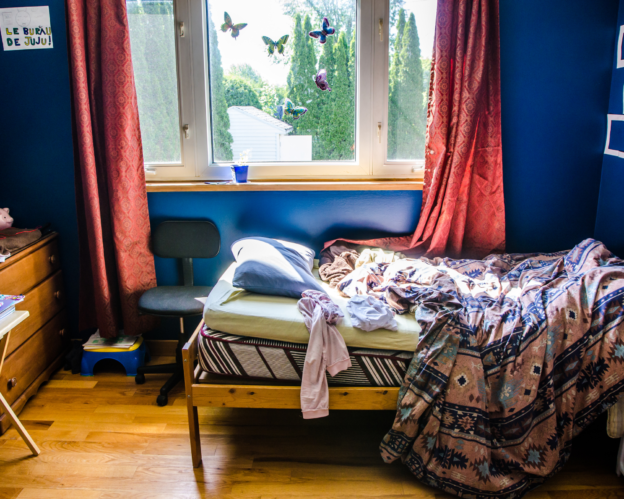
    One of the reasons I wanted to contribute a lifestyle section to Stepparent magazine was because there are so many nuances and subtleties to stepfamily life that aren’t covered by conventional lifestyle advice. One of these is kids’ rooms, especially kids who aren’t full time in your home. How do we manage our expectations around kids who are only there for part of the time versus our expectations of kids who spend the bulk of their time there? Should part-time kids have the same level of resource as full-time kids? Should full-time kids have to share a room because the other room is being used a couple of times a month by a sibling? I can’t answer all of those questions in one article, and more importantly there is no one answer! What I am going to do in this article is share how we manage bedrooms for our kids.

    This month has been an unusually busy one. I’ve taken on extra projects, my husband has been on call more, and we have both been sick and then taken the kids away for a long weekend. Our house is showing the lack of love. One thing I have noticed is that if the house is not showing the love, the state of tidiness deteriorates rapidly. A case in point is our bathroom. It had not been given a good scrub down for a few weeks, Dirty clothes were being left in there, towels on the floor. This past weekend I gave it a good spring clean. Miraculously this week the bathroom is so much tidier. Care is being taken not to leave stuff around and to keep it clean.

    Kids take their lead from us. So, if the rest of our house is showing signs of neglect, you can bet your bottom dollar their rooms will reflect it. I went into the kids’ rooms the other day and took stock. It was not pleasant. It wasn’t over the top gross. It was just a general lack of care and respect for their things. It was a total reflection of the rest of the house. We had been away for the weekend and they then rushed off to school and back to their mum’s the next day, but there have been other times this happened and their rooms were left immaculate.

    Sometimes I will decide to clean for them. Not because I think it’s my job or because they aren’t capable, but because I feel the mess is a reflection of me not setting boundaries and asking them to participate in cleaning their rooms. This time it’s not the case. This time they had been asked repeatedly, and chosen not to comply, and I had been too busy to follow through. So, this time, they will sort their rooms out. It’s not a punishment. There won’t be a telling off or shaming around the mess. The conversation will go ‘Hey guys, this has all got a bit out of control, we need to have a sort out and make it a bit more manageable for you.’

    One thing I have learned in 20 odd years of parenting is that telling kids to clean their room is rarely effective. If we get overwhelmed looking at a mess, you can guarantee that overwhelm is almost paralysing for a child. I break it down into tasks.

    Hey kiddo, just go through your drawers and make sure they are all sorted out before you try and put the clean washing away.

    Have a look in your wardrobe and pick up any clothes that have fallen down, sort out the shoes, and then hang up the clean washing.

    Make your bed and then have a look under it for any randoms, then it will be easy to vacuum.

    And so on…

    The standards between their mum’s house and mine are very different. There is no right or wrong, there is just different. So how is it for kids who have to deal with different expectations between their homes? Is it ok to have different expectations and expect kids to follow them?

    My answer to that is YES! Kids have different school teachers most years. Each teacher has different standards and expectations. Kids manage those quite adequately. They know – Mrs X expects me to do this, Mr Y wants it done this way. Kids also know grandparents have different rules and expectations and manage accordingly. It’s no different for them switching between homes.

    Our kids will hear ‘Is it to my standard?’ when they tell me they have made their bed. Usually the response will be ‘Yes’, when I answer ‘Cool, I’m coming to check, do you need a minute?’ the answer will also often be yes. This is key, I follow through. If I ask for something to be done, I know the chances are it won’t be. Three kids versus one mum means they have learned they can fly under the radar and get away with not doing things. Of course they are going to try that here! They aren’t being naughty or disrespectful, they are being kids.

    So to wrap up – it’s ok to have different standards and expectations. It’s ok to expect part-time kids to manage their rooms, they may also need some help sometimes. We set the standards, so if we let things slip, it’s going to be reflected in our kids spaces too. Make specific requests and follow through. This is more important with part-time kids, because they don’t have the patterning set to immediately mesh with your expectations. They need reminders.

  • The Chores of Self-Care

    The Chores of Self-Care

    This article was originally published in Stepparentmagazine.com

    It seems counter-intuitive to lump chores and self-care in the same sentence, right?!? Isn’t self-care about fun, luxury, the chocolate cake in the bath? What is fun or luxurious about chores?

    For a long time I thought self-care was about indulgence. Indulging my wounded child, not doing the things that seemed boring or onerous. It was about bunking off from doing the things that I didn’t like doing. I’m going to self-care by watching a movie instead of doing the washing or cleaning the house. Self-care was a get out of jail free card. I’m not doing the things, I’m choosing self-care *shines halo*. Except that approach to self-care didn’t really seem to improve my life. Sure, it seemed fun at the time, some of the time. The problem was after I emerged from my cocoon of indulgence, all of the crappy stuff I had been avoiding was still there. A soak in the bath tub did nothing towards reducing chaos at home or making me feel any better about the things I was escaping.

    Let’s take a look at what the goal of self-care is.

    It’s about making our needs a priority, and doing what we need to meet those needs.

    Let’s say that again for those scarfing down the chocolate bar in the vain hope they will feel cared for and nurtured by indulging the inner chocolate fiend…

    Self-care is about making our needs a priority and doing what needs to be done to meet them.

    So I guess the first step towards self-care is figuring out what are the needs are in that moment, or perhaps more importantly, what our unmet needs are. What is it that we need to take care of for ourselves? What is draining resource or leaving us depleted? What do we need to do in order to top up our resources?

    Sometimes it is a good soak in the bath, listening to our favourite music, sipping on a beverage of choice with a tray of snacks, and a good book. Sometimes it is taking a moment to have a cup of tea and a treat, to sit down and stare out of the window while feeling the warmth of the cup in our hand and the delicious indulgence of a treat.

    It’s not always pretty this self-care gig though. Sometimes it’s dragging ourselves to yoga or the gym, when we really, really don’t want to go. Other times, it might be loading the dishwasher before heading out for the day, putting that last load of washing in the dryer before bed. It might be cooking dinner when your whole being is crying out for unhealthy take out.

    I had a week of that last week, the non-glamourous, non-indulgent self-care. I lay in bed after a night of broken sleep, desperately trying to convince myself that going back to sleep before my client session was a better idea than going to anti-gravity yoga. I battled. It was a huge dilemma as to which would be better self-care in that moment. In the end, I decided dragging my aching body along from some stretching was probably going to be of more benefit that lying in bed for another hour or two. I was right, it was. I felt invigorated after yoga. I would not have felt invigorated after a bit more sleep

    When it came time for dinner that night, I didn’t want to cook. I had taken meat out the day before and it needed to be cooked that night or thrown away. My husband was too sick to cook, so it left me. Damn it, where was an adultier adult when I needed one!?! I decided to watch the cooking show I like before I dragged myself into the kitchen to begrudgingly make dinner. It was enough for me to make an effort, we had delicious pork chops on a bed of apple, celery, and onion with sweet wine sauce. The dinner was nurturing, nutritious, and I felt a quiet sense of achievement at the end.

    If I had gone down the indulgent, avoidant ‘self-care’ path that day, I would have ended it feeling like a failure, like my life was out of control, and filled with physical pain. It turns out that sometimes the best self-care is doing the things that feel like work. I’m still a fan of the long bath with music and a cup of tea, I’ll indulge in a massage when time and budget affords. Making time to meet up with friends, reading a book, going for a walk…all of these things are part of a good self-care regime, but don’t forget the satisfaction of a task completed or a life enhancing choice.